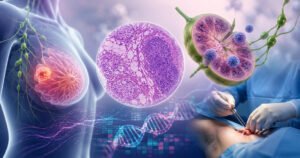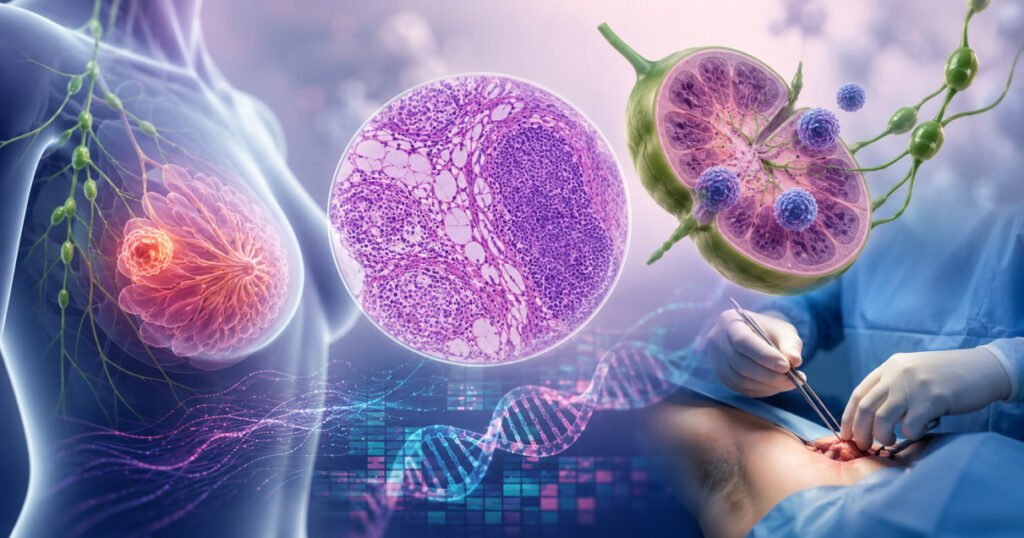
The optimal extent of axillary surgery in breast cancer patients receiving neoadjuvant chemotherapy (NAC) remains controversial, particularly in the setting of increasing rates of nodal pathological complete response (ypN0) and the morbidity associated with axillary procedures. Identifying predictors of ypN0 may refine surgical decision-making and support selective de-escalation strategies.
In this retrospective cohort study, 179 breast cancer patients treated with NAC at a tertiary cancer centre were analyzed with a median follow-up of 27.6 months (mean 30.7 months). The primary endpoint was ypN0. Variables including age, tumor grade, hormone receptor status, HER2 expression, Ki-67 index, clinical tumor (cT) and nodal (cN) stage, and radiological response were evaluated, and multivariable logistic regression identified independent predictors. ypN0 was achieved in 49.2% of patients. All clinically node-negative patients remained ypN0 (27/27, 100%). Among node-positive disease, ypN0 occurred in 35.4% of cN1–2 and 48.2% of cN3 patients (p<0.001). ypN0 was significantly higher in HER2-positive (71%) and triple-negative tumors (68%) compared with hormone receptor–positive/HER2-negative tumors (34%, p<0.001). High Ki-67 (≥20%) was associated with higher ypN0 rates (58% vs 27%, p=0.002). After exclusion of cN0 disease, ypN0 occurred in 67.4% of patients undergoing SLNB and 43.4% undergoing ALNC. HER2 positivity (p<0.001), triple-negative subtype (p=0.004), and high Ki-67 (p=0.01) independently predicted ypN0.
During follow-up, loco-regional recurrence occurred in 1.1%, distant metastasis in 1.1%, and mortality in 0.6% of patients. Taken together, these findings support consideration of omission of axillary surgery in carefully selected clinically node-negative patients, while SLNB may represent a potential alternative to ALNC in selected node-positive cases. Prospective evaluation with longer follow-up is warranted to further clarify oncologic safety.
About the Author

Dr. Mosab Al Ibraheem
Co-Authors: Farooq Khudhair Aboodi, Adil Aljarrah, Suaad Ali Saleh Al Aghbari, Khalid Al Baimani, Suhaila M. Al Farsi, Mustafa Talib, Marwa M. Youssef, Intissar Yehia, Ahmad Matar, Meriem Makhloufi, Badriya S Al Qassabi, Reem Almazroui, Muhammad Y. Jan, Eman K. Koziha, Sally Aziz, Zaid Al-Ishaq.